Late Whistles Vanish: Betting NBA Fourth Quarters When the Refs Step Back
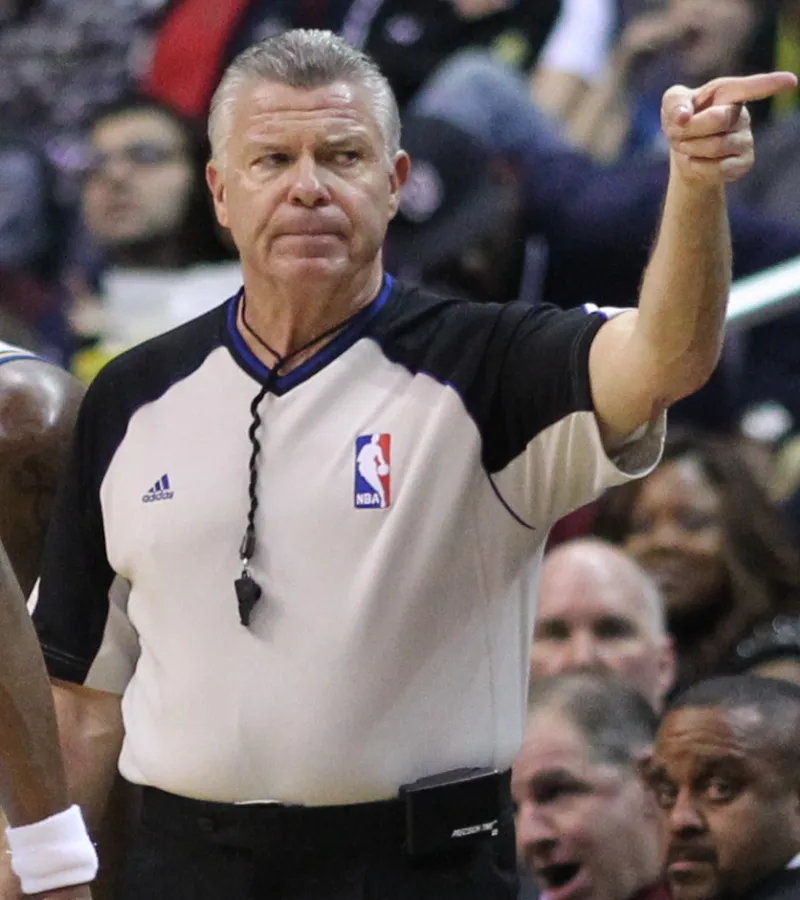
Photo: Keith Allison from Owings Mills, USA, CC BY-SA 2.0, via Wikimedia Commons
There's a moment every NBA bettor has lived through. You've got the over in a tight game, both teams are in the bonus, and you're counting free throws like they're lottery numbers. Then the fourth quarter starts and... nothing. Hand-checks go unwhistled. Drives get met with forearms that draw no foul. The whistle that was blowing every thirty seconds in the second quarter has mysteriously gone silent.
That's not your imagination, and it's not a conspiracy. It's a measurable, repeatable pattern in how NBA games get officiated late — and if you're not accounting for it, you're leaving money on the table.
The Data Doesn't Lie: Fouls Drop When Games Matter
Look at the foul numbers across a full NBA season and a clear trend emerges: personal foul calls per minute decline noticeably in fourth quarters, and the drop is even steeper in nationally televised games and playoff-caliber matchups. Part of this is structural — officials let players "decide the game" — and part of it is game theory. Teams down big stop fouling, and teams up big stop attacking. But even in one-possession games, the whistle rate shrinks.
The practical effect is that scoring, which often spikes in the third quarter as both benches empty into their rotations, can flatten out in the fourth. Possessions slow down. Contact that would've been a shooting foul in the first half becomes "play on." If your live total bet assumed the free-throw parade continues, you're now rooting for half-court heaves.
Why Prime Time Changes the Math
Games on ESPN, TNT, and ABC get tighter officiating tolerance at the margins. Nobody's saying refs are rigged — they're human, and the scrutiny of a national broadcast plus the presence of team analytics departments (who file officiating reports every single game) nudges everyone toward letting marginal contact go. The result: fourth-quarter free-throw attempts in marquee matchups run consistently lower than in a random Tuesday night game between two non-contenders.
This matters most for live betting, where you can see the foul count climbing in the third quarter and be tempted to bet the over on the assumption it continues. Don't. The bonus resets each quarter, and the whistle resets with it.
Whistle-Dependent vs. Self-Sufficient Offenses
Here's the framework worth building into your routine. Sort NBA offenses into two buckets:
Whistle-dependent teams live at the line. They rank near the top of the league in free-throw attempt rate, they feature guards who hunt contact in the paint, and a big chunk of their half-court points come from the charity stripe. When the whistle disappears, their efficiency craters. These are the teams whose live overs die in the fourth quarter, and whose spreads get shaky late if they're not hitting threes to compensate.
Self-sufficient teams generate quality looks regardless of officiating: elite three-point volume, transition offense, and big men who finish through contact rather than around it. These squads actually benefit from a swallowed whistle, because the defense can no longer lean on physical play that the refs were previously policing.
You don't need a subscription service to do this. Pull free-throw attempt rate and three-point attempt rate for both teams, watch a quarter of basketball, and you'll know which category you're in.
Three Betting Applications
1. Fade the live over when the game goes to the bonus early. Counterintuitive, right? If the third quarter is foul-heavy and the total has jumped, the fourth-quarter whistle drought is exactly the correction the market hasn't fully priced. Live totals overreact to recent scoring bursts.
2. Second-half spreads favor self-sufficient teams in tight games. If a whistle-dependent squad is laying points in a close game, the fourth quarter becomes a grind-it-out affair where their primary source of easy points evaporates. The self-sufficient team, meanwhile, still gets its threes and transition buckets.
3. Player props on free-throw-reliant scorers. A star who averages six free-throw attempts a game is a live-under candidate in the fourth quarter of a national TV game. His shot volume stays the same; the trips to the line don't.
A Quick Caveat
None of this is a law of physics. Star-driven playoff basketball sometimes swings the other way, with officials protecting marquee names and superstars getting the benefit of every fifty-fifty call. And a game with a true blowout will have garbage-time fouls that inflate the numbers. Context is everything — which is why the framework matters more than any single stat.
The broader lesson is one that applies across every sport we cover here: the game you bet at 7:00 PM is not the game being played at 10:00 PM. Officiating, rotations, coaching decisions, and desperation all reshape the product in real time. The bettors who profit long-term aren't the ones with the best preseason models. They're the ones who notice when the conditions on the floor have changed — and adjust before the line does.
So next time you're watching a prime-time NBA game with a live ticket in hand, do one thing before you bet the fourth quarter: check who's been getting to the line, and ask whether the refs are still in the mood to send them there. More often than not, they aren't.


