Thin Air, Fat Unders: How Elevation Quietly Breaks Your Betting Model
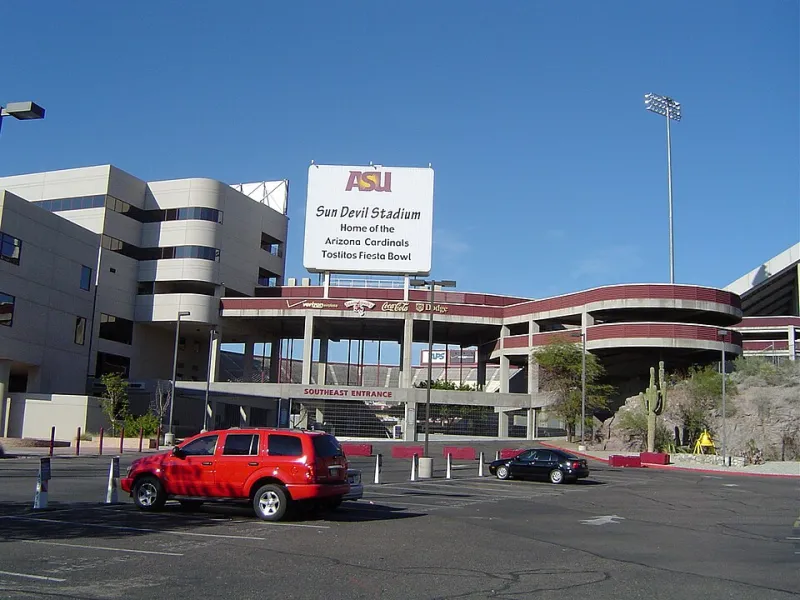
Photo: User Geographer from the English Wikipedia, CC BY-SA 3.0, via Wikimedia Commons
You've done everything right. You checked the injury report, you waited out the opening number, you even looked at the referee crew. And then you fired on the over in Denver because the model said 48 points.
The model didn't breathe a word about the air.
The One Variable Nobody Prices In
Altitude is the most underrated handicap in American sports betting. Everyone knows the Broncos play at elevation the way everyone knows the Packers play in cold. But knowing and adjusting are two different things, and the betting market consistently underweights what 5,000+ feet of thin air actually does to a football game.
Start with the ball itself. A football kicked or thrown at high altitude travels measurably farther — the reduced air resistance is real physics, not folklore. That's why Denver kickers have historically crushed long-field-goal records, and why totals lines at Mile High have spent decades sitting a touch higher than comparable matchups elsewhere. The market knows. It just doesn't know enough.
Where the edge actually lives is the second half. Visiting teams that fly in at sea level and try to run their normal tempo hit a wall around the third quarter. Conditioning coaches talk about it constantly; bettors mostly ignore it. Drives stall. Points dry up. Fourth quarters in Denver and Salt Lake City have run unders at a rate that would make any bettor's ears perk up if it were a referee trend or a weather pattern.
Football: The Third-Quarter Cliff
NFL totals in Denver deserve their own folder in your spreadsheet. The pattern isn't that unders always hit — it's that the shape of the game bends. Fast-paced, pass-heavy visitors tend to slow down after halftime, while altitude-acclimated home teams keep their legs. If you're betting second-half lines or live totals, the third quarter in Denver is where the spreadsheet and the scoreboard start to disagree.
Salt Lake City doesn't have an NFL team, but college football at high elevation tells a similar story, and bowl-season travel to mountain venues catches plenty of bettors flat-footed. When a Gulf Coast program has to make the trip, treat the altitude like a key injury: real, cumulative, and priced too cheaply.
Basketball: Where Legs Die in the Fourth
NBA bettors should circle trips to Utah and Denver on the schedule the same way they circle back-to-backs. Thin air is a stamina tax, and basketball is the most stamina-dependent sport we bet. Teams on the second night of a road trip playing at 4,000+ feet are running on fumes by the fourth quarter — and fourth-quarter totals reflect it.
The live-betting angle might be even better than the pregame one. If a visiting team's star is logging heavy first-half minutes in Salt Lake City, the fourth-quarter under often presents value that the pregame number never offered. Watch the legs, not just the score.
College hoops adds another wrinkle: Air Force, BYU, and New Mexico all play at serious elevation, and non-conference visitors from low-altitude leagues routinely gas out down the stretch. November and December, when mid-majors haven't built deep rotations yet, are prime hunting season for late-game unders at these venues.
The Wildcard: Mexico City
The NFL's international series in Mexico City sits at roughly 7,300 feet — higher than any regular American venue. That's nearly a mile and a half of altitude, and it has produced some genuinely weird games: explosive first quarters followed by visible exhaustion, special-teams chaos, and kickers suddenly hitting from ranges that would be 50/50 propositions elsewhere.
When the schedule drops and a Mexico City game appears, don't just bet the over because the first one you watched was a shootout. Look at the teams. A ball-control, run-heavy squad handles the altitude far better than a track meet waiting to happen — and the market tends to price these games off highlight-reel memory rather than roster fit.
Your Quick Altitude Adjustment Guide
Denver (NFL, ~5,280 ft): Slight lean to full-game unders in hot-weather or dome teams' visits. Strong lean to second-half unders. Kickers overvalued in player props.
Salt Lake City (NBA, ~4,225 ft): Fourth-quarter unders when the visitor played the previous night. Fade high-usage stars in the second half of back-to-backs.
Albuquerque / Colorado Springs (college hoops, 4,500–7,000 ft): November–December non-conference unders, especially late halves against shallow rotations.
Mexico City (NFL international, ~7,300 ft): Fade teams that need speed to win. Expect special-teams volatility. Don't chase last year's total.
The Takeaway
Altitude won't replace your handicapping — it should sit alongside it. But the next time your model spits out a number that feels a half-point too high in Denver or a fourth-quarter total that feels too fat in Utah, remember: the spreadsheet doesn't have lungs. You're the one who has to breathe.
Build the altitude check into your pregame routine the way you built the injury check. The thinnest air in American sports has been quietly paying bettors who noticed. There's no reason you can't be one of them.