Weather Reports Are Free Edges: A Stadium-by-Stadium Guide to Betting NFL Conditions
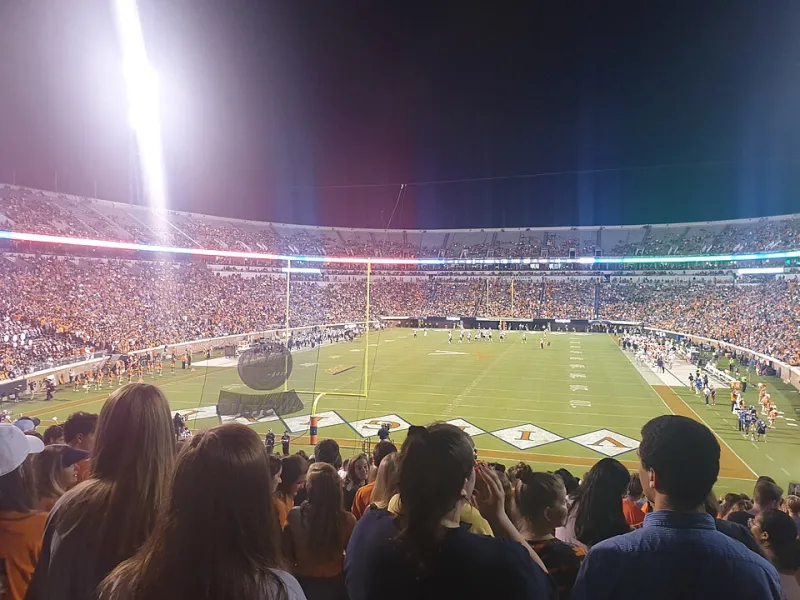
Photo: carlinmack, CC0, via Wikimedia Commons
Every NFL stadium has a personality. Some of them scream. Some of them blow 25-mph gusts sideways across the field goal posts. If you're betting NFL games without factoring in the building itself, you're leaving money on the table — and the books know it.
The market is pretty sharp on big, obvious weather stories. A blizzard in Buffalo makes headlines, and the total adjusts. But the subtler stuff — wind direction, turf type, a dome team flying into late-December misery — often gets priced slower. That's where you come in.
Wind Is the Underrated Total-Killer
Snow gets the highlight reels, but wind is the condition that actually changes how football gets played. Heavy gusts kill the deep passing game, turn 50-plus yard field goals into coin flips, and push coaches toward conservative, run-heavy scripts.
Pay special attention to the AFC North and NFC North in November and December. Chicago's lakefront lake effect is real — Soldier Field sits right on Lake Michigan, and crosswinds there have ended more kicker careers than we can count. Cleveland and Pittsburgh get their share too. When the forecast shows sustained winds above 15 mph with gusts over 25, totals of 44 can play like totals of 36.
The trick: books adjust totals for forecast weather, but forecasts change. If you check the weather Wednesday and again Saturday morning, you can sometimes beat the market to a shift. A total that opened at 46 and drops to 42.5 by kickoff means the early wind bettors won. You want to be the early one.
Dome Teams in December: A Fade Worth Remembering
There's a reason old-school bettors circle certain matchups every year. When a dome team — think Atlanta, New Orleans, Indianapolis, Detroit, Las Vegas, Arizona — travels to a cold-weather outdoor stadium in December or January, the conditions become an extra defender they've never practiced against.
It's not just temperature. It's ball security in the cold, it's footing, it's a passing attack built on timing routes suddenly dealing with a slick ball and stiff crosswind. The market knows this, so you won't get a massive discount — but home underdogs in these spots historically cover at a rate better than random. Small edges, repeated over a season, add up.
Altitude, Turf, and the Details Nobody Bets
Denver is the classic altitude story — the thin air in the Mile High City affects kickers, tired defenses late in games, and visiting teams on short weeks. But don't sleep on the surface question either. Turf versus grass matters for speed-based teams, and it matters for injuries, which matters for your futures tickets.
A fast receiver corps playing on sloppy natural grass in the rain loses a step. An undersized defense on turf in a loud dome gets jumpier. None of this shows up in a box score, but all of it shows up in how a game actually flows.
Travel Schedules Are the Invisible Opponent
West Coast teams flying east for a 1 p.m. ET kickoff are dealing with a three-hour body clock shift. Research on this spot has bounced around over the years, but the general principle holds: travel, time zones, and short weeks grind on rosters, especially late in the season.
Check whether a team is coming off a Monday night road game, whether they crossed time zones, and whether they're on a short week. Books price some of it, but back-to-back travel spots for non-marquee teams can slide under the radar.
How to Build the Habit
Here's a simple routine that takes ten minutes on Saturday night:
- Pull the weather for every outdoor game — temperature, wind speed and direction, precipitation chance.
- Flag totals above 45 with wind gusts over 20 mph — those are your under candidates.
- Note dome-to-cold road spots for the rest of the schedule.
- Check travel: time zone crossings, short weeks, Monday-to-Sunday turnarounds.
You're not going to win every wind bet or fade every dome team. But stacking small, repeatable edges — the stuff the casual bettor ignores because it requires checking a weather app — is exactly how a bankroll survives a 17-week season.
The point spread is a number. The stadium is a place. Bettors who remember the difference tend to cash more tickets between October and January, when the weather stops being a backdrop and starts being a participant.