Why the Spread Moved: A Bettor's Field Guide to Line Movement
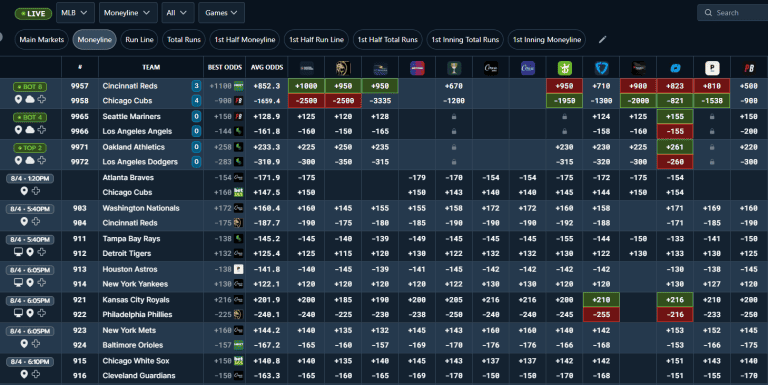
Photo: sportsbook odds board football betting screens, via www.sportsbookscout.com
The Number Is a Conversation, Not a Verdict
Every betting line you see on Bet24Red is really the sportsbook's opening argument. It's not the final word — it's the starting bid in a negotiation between the book, the sharps, and the sea of casual money that floods in every Saturday and Sunday morning.
If you've ever locked in a bet at -3 on Thursday only to watch the line creep to -4.5 by kickoff, you've felt the sting of losing half a point of value without the game changing at all. The smartest thing a recreational bettor can do isn't picking more winners. It's understanding why numbers move — because once you do, you stop paying retail for your bets.
Who Actually Moves a Line?
There are two forces pushing on every spread, and they usually pull in opposite directions.
Sharp money comes from professional bettors and winning syndicates. These are folks betting five figures at a clip, and books respect them enough to adjust the line the moment their wagers land. Sharp moves tend to be quiet, early in the week, and often against the popular side. When a small-market NBA total drops two points overnight with no injury news, that's usually not a coincidence — that's a professional group hammering the under.
Public money is the rest of us, in aggregate. The public loves favorites, overs, and big brands. When 75% of tickets are on the Cowboys laying a field goal, the book doesn't necessarily need to move the line — they're happily holding Dallas liability. But when the public piles on AND the line still moves the other way? That's the loudest signal in sports betting: the sharps are on the other side, and the book would rather expose itself to the crowd than to the pros.
A Tale of Two Moves: Recent Examples
Take a recent NFL Sunday where a divisional dog opened at +6.5. By Friday, injury reports confirmed the favorite's QB1 was limited in practice, and the line dipped to +5. That's a news-driven move — predictable, reactive, and already priced in by the time most casual bettors saw it. If your plan was to bet the dog because of the injury, you're late. The value existed Tuesday, not Sunday.
Contrast that with an NBA game from last season where the Lakers, fresh off a nationally televised win, opened as modest favorites against a struggling Western Conference foe. Nearly 80% of tickets came in on Los Angeles, yet the line flipped — the Lakers went from -2 to +1 by tip-off. No injury. No rest news. That's a classic reverse line movement: the crowd on one side, the number going the other. The unheralded opponent won outright. Anyone who trusted the move over the brand cashed a nice moneyline ticket.
The Pre-Bet Checklist
Before you fire on anything, run through these five checkpoints:
- Find the opener. Sites like our odds pages at Bet24Red archive opening numbers. If the current line has moved a full point or more, ask what changed — injury, weather, or money.
- Check the ticket split vs. money split. 70% of bets on one side but only 55% of the dollars means the public is outnumbered by bigger wagers. That's sharp-shaped.
- Time the move. Early-week moves tend to be sharp. Late-Sunday moves after the early games are often just people chasing.
- Watch for steam. When multiple books move the same direction within minutes, that's coordinated sharp action, not one whale.
- Buy the number, not the team. If you love a side at -3, you might love it more at -2.5. Half-points are the cheapest insurance in sports.
When Doing Nothing Is the Play
Here's the part nobody puts on a betting podcast: sometimes the best reaction to line movement is to skip the game entirely. If the number you wanted is gone and you can't articulate why the new price is still valuable, pass. There are 15 NFL games and a full NBA slate every week. Discipline is a skill, and it compounds like bankroll interest.
The books count on casual bettors betting first and thinking later. Flip that order, and you're already ahead of the crowd — which, conveniently, is exactly where the money tends to be.