Silent Sundays: Ranking the NFL Stadiums That Still Move the Spread (and the Ones That Just Sell Noise)
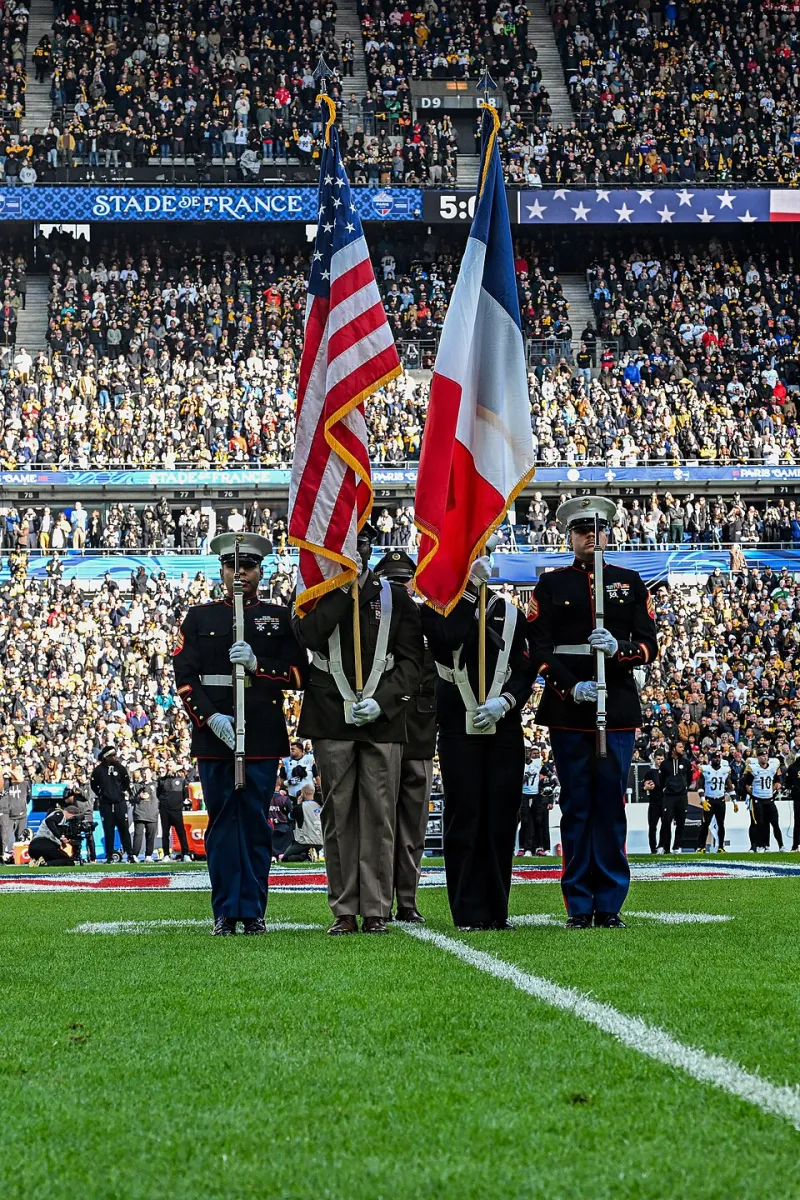
Photo: U.S. Air Force photo by Staff Sgt. Jan Valle, Public domain, via Wikimedia Commons
There was a time when the road team in the NFL was basically walking into a haunted house. Refs couldn't hear their own whistles, quarterbacks burned timeouts trying to hear the play call, and oddsmakers slapped a flat three points on the home side of every line. That era is over. Home-field advantage across the league has been shrinking for a decade, and in some buildings it's practically a rounding error.
But not everywhere. If you're betting NFL spreads in 2024 and treating all 30 stadiums the same, you're leaving money on the table — or worse, paying a premium for intimidation that doesn't exist anymore. Let's separate the buildings that still earn their edge from the ones coasting on reputation.
The League-Wide Slide Nobody Priced Fast Enough
The average home-field edge in the NFL has hovered closer to 1.5 points in recent seasons, down from the historic 2.5 to 3-point standard. Some of that is rule-driven — the roar of a crowd matters less when quarterbacks can control tempo with hand signals and hard counts work both ways. Some of it is travel-driven — charter flights, sleep science, and modern recovery routines mean a cross-country trip isn't the body-clock wrecker it used to be.
The market knows this. Sportsbooks aren't handing out three points for playing at home anymore, and if anything, they've overcorrected in certain buildings. That's where the betting opportunity lives: figuring out which venues are still underpriced and which reputations are doing the oddsmakers' work for them.
Still Real: The Venues That Actually Move Numbers
Arrowhead Stadium (Kansas City). The decibel records are more than a party trick. Arrowhead remains the loudest environment in football, and it shows up where noise matters most — pre-snap penalties, false starts, and burnt timeouts in tight fourth quarters. When the Chiefs are modest favorites at home instead of laying a big number, the environment is quietly doing extra work.
Lambeau Field (Green Bay). Small market, brutal December conditions, and a surface that turns slick when the wind picks up off Lake Michigan. Late-season totals at Lambeau tend to drop faster than the thermometer, and road teams from warm-weather divisions playing there in December have historically covered at a rate that outpaces the line.
Lumen Field (Seattle). The 12s still make this one of the most disorienting road environments for visiting offenses. Seattle's coastal location also means the longest travel legs in the league for Eastern Time Zone teams — a 1 p.m. local kickoff is a body-clock nightmare for a squad that flew in from Miami or New York.
Empower Field / High Altitude (Denver). The altitude angle is real but seasonal. Early in the year, everyone's legs are fresh and it barely registers. By November, when road teams are banged up and Denver's roster is conditioned to the elevation, the fourth quarter belongs to the home side more often than the spread suggests.
The Mirage List: Reputation Without Receipts
The Superdome (New Orleans). Once a genuine house of horrors, the dome's edge has compressed dramatically. Indoor comfort, a rebuilt roster cycle, and modern communication tools have sanded down what used to be a legit two-point environment. The name still scares casual bettors — which sometimes inflates the Saints' home line by half a point. That's a fade signal, not a reason to back the home team.
AT&T Stadium (Dallas). The biggest venue in the league is also one of the quietest relative to its size. The crowd skews toward spectacle, and road teams with big fanbases — the Giants, Eagles, Steelers — routinely fill a third of the building. Home-field advantage doesn't work when the opponent's section is doing the wave.
Hard Rock Stadium (Miami). Great weather, great atmosphere, lousy edge. The heat angle only matters in September home games against northern teams, and even then it's priced in. Once October rolls around, Miami is about as neutral a site as the league has.
How to Actually Use This at the Window
Three practical rules:
-
Fade the reputation, back the mechanics. Crowd noise, altitude, turf, and travel distance are measurable. "Tough place to play" is a TV talking point. Bet the former, not the latter.
-
Calendar matters more than address. Lambeau in October is a nice road trip. Lambeau in December is a coin flip with frostbite. Adjust your venue-based reads by month, not by logo.
-
Watch the total, not just the spread. Weather and turf quirks show up in totals first. If a line isn't budging but the total is sliding in a hostile outdoor venue, the market is telling you the environment is doing the work.
The bottom line: home-field advantage isn't dead, but it's become a boutique product. A handful of buildings still sell the real thing — noise, altitude, weather, and exhaustion — while the rest are trading on nostalgia. Your job as a bettor is to know which is which before the line does.